
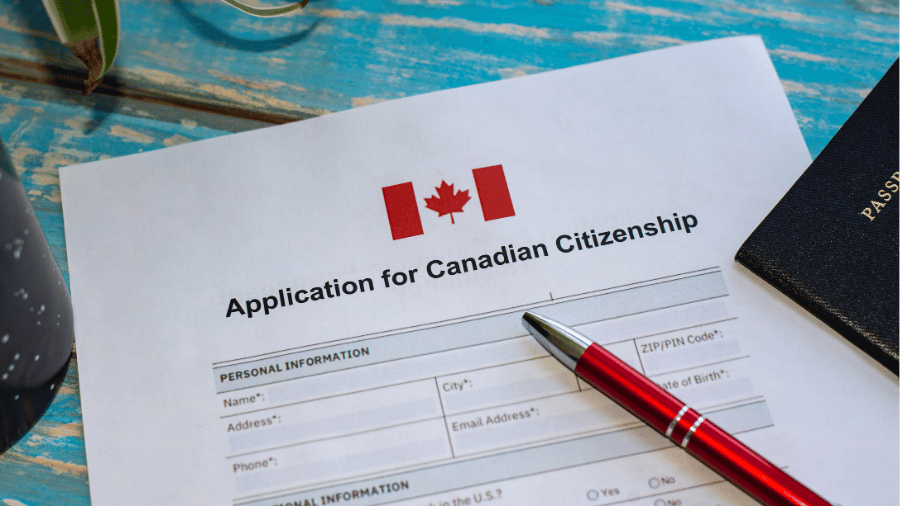
Can a Criminal Record Affect a Canadian Citizenship by Descent Claim?
If you were born outside Canada and have a Canadian parent, you may be wondering whether you can claim Canadian citizenship by descent. But what happens if you also have a criminal record, a past conviction, a pending charge, or a criminal matter in another country?
This is an important question because Canadian citizenship law distinguishes between already being a Canadian citizen by operation of law and applying to become a Canadian citizen through a grant.
The rules surrounding citizenship by descent also changed significantly on December 15, 2025, when Bill C-3 came into effect. The changes removed the previous first-generation limit in certain circumstances and created new rules for people born or adopted abroad.
As a result, a person with a criminal record should not automatically assume that they are unable to claim Canadian citizenship by descent.
The correct answer depends on several factors, including your date of birth, your parent’s citizenship, where your parent was born, your family’s citizenship history, your physical-presence connection to Canada where applicable, and the nature and timing of your criminal record.
Canadian Citizenship Consultant Toronto: Understanding Citizenship by Descent
A person born outside Canada to a Canadian parent may already be a Canadian citizen under the Citizenship Act. In these circumstances, the individual may apply for a citizenship certificate as proof of Canadian citizenship rather than applying to become a citizen through the normal naturalization process. IRCC provides a process for people who believe they are already Canadian to obtain proof of citizenship.
This distinction is important when a criminal record is involved.
A citizenship certificate application and an application for a grant of citizenship are not the same thing. Criminal prohibitions in section 22 of the Citizenship Act specifically address certain situations involving the grant of citizenship and taking the oath.
Therefore, someone with a criminal record should first determine whether they are claiming an existing citizenship status by descent or seeking to become Canadian through a grant.
A Canadian Citizenship Consultant Toronto can help applicants understand the documentation and process involved in a citizenship-by-descent case.
Canadian Citizenship Consultant Etobicoke: Does a Criminal Record Automatically Prevent a Claim?
Having a criminal record does not automatically mean that a person cannot be Canadian by descent.
The Citizenship Act contains criminal prohibitions that can prevent a person from being granted citizenship in specified circumstances. For example, section 22 addresses situations involving probation, parole, imprisonment, certain criminal charges, convictions, and certain foreign convictions.
However, citizenship by descent is based on whether the individual meets the legal requirements for citizenship.
This means that a criminal record should be analyzed in the context of the person’s citizenship status rather than automatically treated as a bar to every citizenship claim.
If you were born outside Canada and believe you acquired citizenship through a Canadian parent, your case should be assessed based on your complete citizenship history.
A Canadian Citizenship Consultant Etobicoke can assist with reviewing the family relationship, citizenship documents, birth records, and other supporting evidence required for a citizenship certificate application.
Citizenship Consultant Toronto: Citizenship by Descent vs. Citizenship Grant
One of the most important distinctions is between citizenship by descent and citizenship by grant.
Citizenship by descent
Citizenship by descent concerns people who acquire Canadian citizenship through a Canadian parent or, under the updated rules, through certain qualifying family relationships involving generations born or adopted abroad.
The individual may already be a Canadian citizen and may need to obtain official proof of citizenship.
Citizenship by grant
A citizenship grant is a process through which an eligible person becomes a Canadian citizen after meeting the requirements established by the Citizenship Act.
Criminal prohibitions can directly affect citizenship grants. Section 22 currently states that certain people cannot be granted citizenship or take the oath while they are serving imprisonment, on probation or parole, or facing certain criminal proceedings. It also establishes restrictions relating to specified convictions.
This is why having a criminal record does not provide enough information by itself to determine the outcome of a citizenship-by-descent matter.
A Citizenship Consultant Toronto can help identify which citizenship process applies to your situation.
Citizenship Consultant Etobicoke: How the 2025 Rules Changed Citizenship by Descent
Canada’s citizenship-by-descent rules changed on December 15, 2025, when Bill C-3 came into force.
Before the change, the first-generation limit generally restricted the transmission of Canadian citizenship to children born or adopted outside Canada beyond the first generation.
The new law changed this framework. People born outside Canada before December 15, 2025 who would have been Canadian but for the former first-generation limit or certain other outdated rules may now be Canadian under the new law.
The new rules also establish a framework for people born or adopted outside Canada on or after December 15, 2025.
Where the Canadian parent was also born or adopted outside Canada, the parent generally needs to demonstrate at least 1,095 days of physical presence in Canada before the child’s birth or adoption to establish the required substantial connection.
A Citizenship Consultant Etobicoke can help applicants understand which version of the rules applies based on their date of birth and family circumstances.
Canada Immigration Consultant Toronto: What If the Criminal Record Is From Another Country?
A foreign criminal record can require additional analysis.
Canadian citizenship law contains specific provisions concerning foreign convictions. Section 22 provides that certain foreign convictions can result in a prohibition from being granted citizenship where the offence, if committed in Canada, would constitute an indictable offence and the conviction occurred within the applicable period.
This means that the country where the offence occurred, the exact offence, the date of conviction, the sentence, and the Canadian equivalent of the offence can all be relevant.
A foreign criminal record should therefore not simply be described as a generic “criminal record.”
For example, two applicants may both have convictions in another country but have very different legal circumstances because of the type of offence, timing, sentence, and applicable Canadian law.
A Canada Immigration Consultant Toronto can help identify the documentation that may be required for a broader Canadian immigration or citizenship assessment.
Canada Immigration Consultant Etobicoke: What If You Have a Pending Criminal Charge?
A pending criminal charge is different from a completed conviction.
For citizenship grants, section 22 includes prohibitions where a person is charged with, on trial for, subject to, or party to an appeal concerning certain offences. The provision also addresses certain foreign offences that would constitute indictable offences in Canada.
This means that someone with an active criminal matter should not assume that the matter is irrelevant to a citizenship application.
At the same time, the existence of a criminal charge does not by itself answer whether someone is already a Canadian citizen by descent.
The citizenship question and the criminal prohibition question should be analyzed separately.
If you are dealing with both a citizenship-by-descent claim and an active criminal proceeding, obtaining professional advice before submitting documents can help you understand which legal pathway applies.
A Canada Immigration Consultant Etobicoke can assist with the immigration and citizenship process, while criminal-law advice may be appropriate for questions about the criminal proceeding itself.
Canada PR Consultant Toronto: Citizenship Issues Are Different From Permanent Residence
Some people with citizenship questions also consider permanent residence as an alternative pathway to Canada.
This creates another important distinction.
Permanent residence and citizenship are separate Canadian immigration statuses.
A person who is already entitled to Canadian citizenship by descent generally does not need to become a permanent resident first simply to establish that citizenship.
On the other hand, someone who is not a Canadian citizen may explore permanent-residence pathways depending on their circumstances.
A Canada PR Consultant Toronto can explain permanent-residence options where citizenship by descent is not available or where a separate immigration pathway is being considered.
However, applicants should first determine whether they may already be Canadian before assuming that they need to apply for permanent residence.
Canada PR Consultant Etobicoke: What If Citizenship by Descent Does Not Apply?
Not every person with a Canadian relative automatically qualifies for citizenship.
The relationship, generation, date of birth or adoption, citizenship history, and other legal requirements must be examined.
The 2025 changes expanded citizenship by descent in certain circumstances, but they did not mean that every person with a Canadian ancestor automatically becomes Canadian.
For certain people born or adopted abroad on or after December 15, 2025, where the Canadian parent was also born or adopted abroad, the substantial-connection requirement involves the Canadian parent having at least 1,095 cumulative days of physical presence in Canada before the child’s birth or adoption.
If a person does not qualify for citizenship by descent, a different immigration pathway may need to be considered.
A Canada PR Consultant Etobicoke can help assess whether permanent-residence options may be relevant to the person’s circumstances.
Immigration Consultant Toronto: What Documents Are Important?
Citizenship-by-descent cases are document-intensive because the applicant needs to establish the citizenship connection.
Depending on the circumstances, documents may include:
- Applicant’s birth certificate
- Canadian parent’s birth certificate
- Canadian parent’s citizenship certificate
- Grandparent or earlier-generation citizenship documents where relevant
- Marriage certificates
- Adoption documents
- Legal name-change documents
- Evidence of physical presence in Canada where required
- Immigration records
- Court records relating to criminal matters
- Documents concerning convictions, sentences, pardons, or record suspensions where applicable
IRCC’s citizenship guidance explains that people seeking proof of citizenship need to provide documentation establishing their citizenship claim.
An Immigration Consultant Toronto can help organize the application package and identify missing documentation before submission.
Where criminal records are involved, applicants should be particularly careful about providing accurate information and complete documentation.
Immigration Consultant Etobicoke: Why Criminal Record Details Matter
Not every criminal record has the same legal significance.
The assessment may depend on:
- Type of offence
- Date of charge
- Date of conviction
- Sentence imposed
- Whether the sentence has been completed
- Whether the person is on probation
- Whether the person is on parole
- Whether the offence occurred inside or outside Canada
- Whether the person is currently facing a charge
- Whether the conviction was appealed
- Whether a pardon, record suspension, or similar relief was granted
For citizenship grants, section 22 currently contains specific restrictions relating to convictions during the four-year period immediately before an application and convictions during the period between the application and the granting of citizenship or taking of the oath.
Foreign convictions can also be relevant under separate provisions.
An Immigration Consultant Etobicoke can help applicants understand which immigration or citizenship documents may be relevant, although legal advice concerning the criminal offence itself may require a qualified criminal lawyer.
Canadian Citizenship and a Person Who Is Currently Incarcerated
Another common question is whether a person who is currently in prison can claim Canadian citizenship by descent.
For citizenship grants, section 22 establishes prohibitions relating to people who are serving a term of imprisonment, are on parole, or are under a probation order.
However, these provisions must be distinguished from whether someone already has citizenship by descent.
The fact that a person has a criminal record or is incarcerated does not automatically resolve the separate question of whether they are legally a Canadian citizen through descent.
A citizenship-by-descent assessment should therefore begin with the citizenship chain and applicable citizenship legislation.
What If You Have an Old Criminal Conviction?
An old conviction should still be disclosed where the application requires information about criminal history.
However, the legal effect of an old conviction can depend on the type of citizenship application and the details of the offence.
For citizenship grants, the Citizenship Act establishes specific time periods for certain criminal prohibitions. The current section 22 provisions refer to convictions during the four years immediately before an application and during the period from application until citizenship would otherwise be granted or the oath taken.
Foreign convictions have their own provisions under section 22.
Therefore, an applicant should not assume that an old conviction is automatically irrelevant or automatically disqualifying.
The exact facts should be reviewed.
How New Jain Immigration Services Can Help With Citizenship and Immigration Matters
For individuals in Etobicoke and the Greater Toronto Area, New Jain Immigration Services provides assistance with Canadian immigration and citizenship matters.
A citizenship-by-descent case can require careful review of multiple generations, birth and adoption records, Canadian citizenship documents, and the date-specific rules that apply to the applicant.
Where a criminal record is also present, the situation can become more complex.
New Jain Immigration Services can help clients understand the documentation and procedural requirements relevant to their immigration or citizenship matter, including cases involving:
- Canadian citizenship by descent
- Citizenship certificates
- Canadian citizenship applications
- Citizenship documentation
- Permanent residence
- Family immigration
- Immigration applications
- Complex immigration histories
If a case involves criminal charges, convictions, or other criminal-law issues, applicants should also consider obtaining appropriate legal advice regarding those matters.
Frequently Asked Questions About Criminal Records and Canadian Citizenship by Descent
Can a criminal record prevent Canadian citizenship by descent?
Not automatically. A citizenship-by-descent claim concerns whether the person is Canadian under the Citizenship Act. Criminal prohibitions under section 22 specifically apply to specified citizenship grants and taking the oath.
Can someone with a foreign conviction claim Canadian citizenship by descent?
A foreign conviction does not automatically answer whether someone is a Canadian citizen by descent. However, foreign convictions can create citizenship prohibitions in certain citizenship-grant situations. The exact offence and circumstances must be examined under Canadian law.
Do the 2025 citizenship changes affect people born outside Canada?
Yes. Bill C-3 came into effect on December 15, 2025 and changed the first-generation limit to citizenship by descent. Certain people born abroad before that date may now be Canadian, while future cases can involve a 1,095-day physical-presence requirement for the Canadian parent born or adopted abroad.
Does having a Canadian parent automatically make me Canadian?
Not necessarily in every circumstance. Citizenship eligibility depends on the applicable Citizenship Act provisions, the date and place of birth or adoption, the parent’s citizenship history, and other relevant facts.
Should I apply for permanent residence if I have a Canadian parent?
You should first determine whether you may already be a Canadian citizen. IRCC specifically provides a process for people to check whether they may already be Canadian and obtain proof of citizenship.
Can a citizenship consultant help with a citizenship-by-descent application?
A qualified immigration professional can help explain the applicable process, documentation, and application requirements. Where the case includes complex criminal-law issues, separate legal advice may also be appropriate.
Conclusion: Criminal Records and Canadian Citizenship by Descent
A criminal record does not automatically mean that a person cannot establish Canadian citizenship by descent.
The most important step is to determine whether the person is already a Canadian citizen under the Citizenship Act or whether they are applying to become a Canadian citizen through a grant.
This distinction is particularly important because the criminal prohibitions in section 22 concern specified citizenship grants and taking the oath.
The citizenship-by-descent framework also changed on December 15, 2025. Bill C-3 expanded access to citizenship in certain second-generation and later-generation situations and introduced a substantial-connection requirement for certain people born or adopted abroad on or after that date.
Therefore, if you were born outside Canada, have a Canadian parent or qualifying Canadian family connection, and have a criminal record, your situation should be assessed based on the specific citizenship rules, family history, dates, and criminal-record circumstances.
For assistance with Canadian citizenship, citizenship by descent, citizenship certificates, permanent residence, and related immigration matters, New Jain Immigration Services in Etobicoke, Toronto can help you understand the appropriate process and documentation for your circumstances.