

Latest Data Shows Proof of Canadian Citizenship Finalizations Returned to Pre-Review Pace in September
Canada’s citizenship application process continues to be an important topic for permanent residents, Canadian-born families, individuals with Canadian ancestry, and applicants seeking confirmation of their citizenship status. Recent processing data indicates that proof of Canadian citizenship finalizations returned to a pre-review pace in September, offering an important update for individuals waiting for their citizenship certificates.
Proof of Canadian citizenship is an essential document for people who are already Canadian citizens but need official confirmation of their status. Unlike a citizenship grant application, a proof of citizenship application does not make an individual a Canadian citizen. Instead, it establishes or confirms citizenship that the person already possesses under Canadian law.
Changes in processing activity can affect applicants’ expectations, especially those who need citizenship certificates for passports, travel, employment, identification, family documentation, or other important purposes. Understanding what the latest finalization trend means, how the proof of citizenship process works, and what applicants can do while waiting can help individuals plan more confidently.
In this article, we explore the latest September processing trend, the meaning of proof of Canadian citizenship finalizations, who may qualify, the application process, and what applicants should consider when preparing their documents.
1. September 2026 Proof of Citizenship Processing Statistics
According to the latest data published by Immigration, Refugees and Citizenship Canada (IRCC), the department finalized 5,705 proof of Canadian citizenship applications in September 2026. This represents a significant increase compared with August, when 3,955 applications were finalized.
September’s output was approximately 44% higher than August and brought processing activity close to the monthly average recorded from January through May 2026.
September processing showed a notable recovery after the slowdown experienced during the summer months.
Monthly processing comparison
| Period | Certificates finalized |
| January–May monthly average | 5,788 |
| June 2026 | 3,040 |
| July 2026 | 2,420 |
| August 2026 | 3,955 |
| September 2026 | 5,705 |
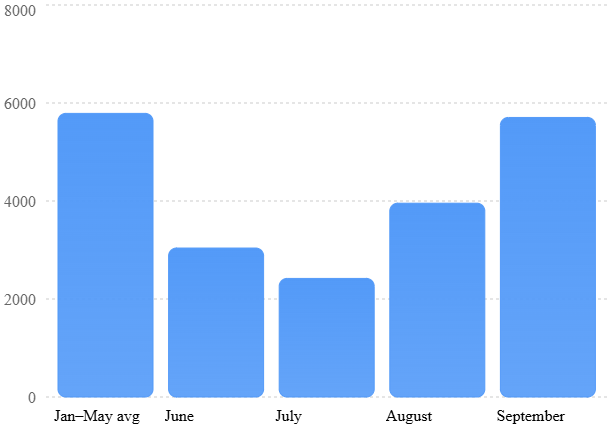
These numbers suggest that IRCC’s proof of citizenship processing operations have recovered from the slowdown observed in June and July. However, one month’s improvement does not necessarily mean that the overall backlog has been cleared or that individual applicants will receive their certificates sooner.
The figures are derived from IRCC’s cumulative year-to-date totals, which means the monthly totals are calculated by subtracting the previous month’s reported number from the latest cumulative figure.
2. Why Proof of Citizenship Processing Slowed Earlier in 2026
The proof of citizenship application stream experienced a notable slowdown during the summer of 2026. Processing activity dropped in June and continued to decline in July, creating additional pressure on applicants waiting for citizenship certificates.
One contributing factor was a review of previously issued citizenship certificates. During this review, IRCC examined documentation associated with some certificates already issued, including certificates connected to citizenship by descent applications. This review affected processing activity during the summer.
The number of applications finalized fell to 3,040 in June and further declined to 2,420 in July. As fewer applications were finalized while new applications continued to enter the system, the waiting queue expanded considerably.
By August, processing began recovering, with 3,955 applications finalized. September continued that improvement, reaching 5,705 finalizations.
The latest numbers therefore represent a welcome recovery in processing activity, although the backlog remains a significant concern for applicants.
3. Citizenship Certificate Backlog Shows Signs of Improvement
One of the most notable developments in the September data is the change in the number of proof of citizenship applications waiting for a decision.
At the end of September 2026, IRCC reported 130,685 applications awaiting finalization. This was approximately 5,280 fewer applications than the 135,965 recorded at the end of August.
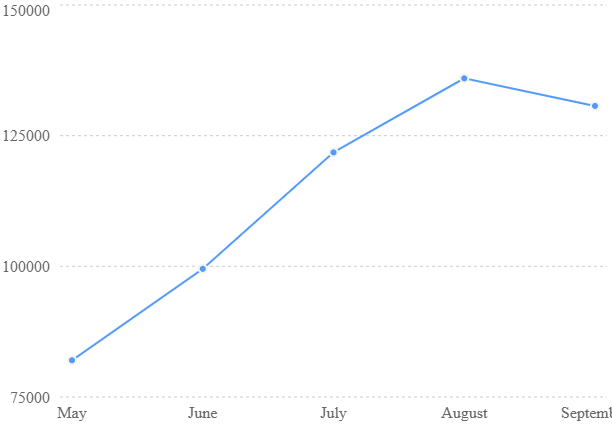
This is an important change because the backlog had increased throughout the previous months of 2026. September marked the first reported month-end decline in the queue during this period.
However, the number of pending applications remains substantially higher than it was in May. The backlog is still approximately 59% larger than the May 31 total of 82,020 applications.
Applicants should therefore view September’s decrease as an encouraging sign rather than confirmation that processing times are returning to normal.
4. How Bill C-3 Changed Canadian Citizenship by Descent
The demand for proof of citizenship certificates has increased following changes to Canada’s citizenship legislation.
Bill C-3, which came into effect on December 15, 2025, changed rules affecting citizenship by descent for certain individuals born outside Canada. The changes removed the former first-generation limit for many people born before the new law took effect, allowing citizenship claims to extend further through generations in qualifying circumstances.
This has opened new opportunities for individuals with Canadian ancestry who previously may not have qualified under the former rules.
People with a Canadian parent, grandparent, great-grandparent, or more distant ancestor may wish to examine their family history and determine whether they qualify under the updated citizenship legislation. Eligibility depends on the circumstances of the applicant, the dates of birth, the citizenship history of each generation, and the applicable legal requirements.
Many individuals who qualify under these changes are not applying to become Canadian citizens through naturalization. They may already be citizens under the law and simply need official documentation confirming their citizenship status.
This distinction has become especially important for Americans with Canadian ancestry and families living abroad who are exploring their eligibility for Canadian citizenship.
5. What Is a Proof of Canadian Citizenship Certificate?
A Canadian citizenship certificate, commonly referred to as proof of citizenship, is an official document issued by IRCC confirming that an individual is a Canadian citizen.
It is generally used by individuals who:
- Were born outside Canada to a Canadian parent and need proof of their citizenship.
- May qualify for Canadian citizenship through descent under updated citizenship legislation.
- Have lost, damaged, or misplaced their previous citizenship certificate.
- Need official documentation confirming their Canadian citizenship status.
- Want to obtain a Canadian passport after confirming their citizenship.
A citizenship certificate is not the same as a Canadian passport. The certificate confirms citizenship, while a passport is a travel document issued to eligible Canadian citizens.
Individuals who receive proof of citizenship may subsequently apply for a Canadian passport, provided they meet the passport application requirements.
6. Who May Apply for Proof of Canadian Citizenship?
Eligibility for a Canadian citizenship certificate depends on whether an individual is already a Canadian citizen under the applicable citizenship laws.
Potential applicants include:
Canadian citizens born abroad: Individuals born outside Canada to a Canadian parent may already hold Canadian citizenship and can apply for a citizenship certificate to confirm their status.
Individuals with Canadian ancestry: Following legislative changes, certain individuals born abroad with Canadian ancestors may qualify for citizenship by descent even if the connection extends beyond the first generation.
Individuals replacing citizenship certificates: Canadian citizens who previously received a citizenship certificate but have lost it, or require a replacement, may apply for a new certificate.
Individuals requiring official confirmation of citizenship: People who need documentation for a passport application, government procedures, personal records, or other purposes may require proof of citizenship.
Applicants should carefully examine their family history and citizenship eligibility before submitting an application. Not every connection to a Canadian ancestor automatically establishes citizenship, and specific legal conditions may apply.
7. How to Apply for a Canadian Citizenship Certificate
Applicants should prepare their proof of citizenship application carefully to avoid unnecessary delays, document requests, or complications.
Step 1: Confirm your citizenship eligibility
Determine whether you are already a Canadian citizen under the current Citizenship Act. Review your birthplace, your parents’ citizenship status, your family ancestry, and the dates relevant to your citizenship claim.
Step 2: Gather supporting documents
Depending on your circumstances, you may need:
- Birth certificate showing your date and place of birth.
- Birth certificates of parents and grandparents, where applicable.
- Documents establishing the connection to a Canadian ancestor.
- Canadian birth certificates or citizenship records of relevant family members.
- Marriage certificates or legal name-change documents.
- Identity documents and photographs meeting IRCC requirements.
Step 3: Complete the appropriate application
Select the correct proof of citizenship application and ensure that the forms are completed accurately. Review the current IRCC instructions, fees, photograph specifications, and document requirements before submitting.
Step 4: Submit your application
Applicants can submit their application through the available IRCC application method applicable to their situation. Ensure that the required documents and payment are included.
Step 5: Monitor your application status
After submission, monitor communications from IRCC, check your application status when tracking is available, and respond promptly if additional documents or information are requested.
Incomplete applications, missing supporting records, inconsistent names, and insufficient evidence of ancestry may contribute to delays.
8. How Long Does It Take to Receive Proof of Canadian Citizenship?
Although September’s finalization numbers showed an improvement, applicants should not assume that the processing time has immediately decreased.
IRCC’s published processing time in early November 2026 was approximately 34 months for a new proof of citizenship application. Processing times may change as the department receives new applications, finalizes existing cases, and adjusts its operational capacity.
Several factors may influence the processing of an individual application:
- The overall number of applications in the processing queue.
- Whether the application is complete and correctly submitted.
- The complexity of the applicant’s citizenship claim.
- Whether additional verification or supporting documents are required.
- Whether the applicant qualifies for urgent processing.
- Administrative processing capacity and changes in application volume.
Applicants living outside Canada should also consider additional time for document delivery and mailing.
For anyone planning international travel, passport applications, education, employment, or other time-sensitive matters, applying early and keeping records organized may help prevent last-minute difficulties.
9. Can You Request Urgent Processing?
In certain circumstances, IRCC may consider requests for urgent processing of proof of citizenship applications. However, urgent processing is not automatic, and applicants must provide supporting evidence demonstrating why they need their citizenship certificate sooner than the regular processing time.
Possible reasons may include:
- A job opportunity requiring proof of Canadian citizenship.
- Educational admission or enrolment requirements.
- A serious medical situation or family emergency.
- Access to certain benefits or services where citizenship documentation is required.
- Other qualifying urgent circumstances accepted by IRCC.
Applicants requesting urgent processing should provide a clear explanation of their circumstances along with supporting documents, such as an employer’s letter, school documentation, medical records where appropriate, or evidence of the deadline.
IRCC evaluates urgent processing requests on a case-by-case basis. Submitting an urgent request does not guarantee that an application will be expedited.
10. What September’s Processing Recovery Means for Applicants
The increase in September finalizations is a positive development for individuals waiting for proof of citizenship. After several months of lower processing activity, IRCC finalized 5,705 applications, bringing processing output close to the average recorded before the summer slowdown.
The decrease in the pending queue is also encouraging. However, the department still has more than 130,000 proof of citizenship applications awaiting finalization, and the published processing time remains lengthy.
Applicants should continue to prepare their documents carefully, submit complete applications, and avoid relying on a single month’s processing figures to estimate when their own certificates will arrive.
Those considering applying under the expanded citizenship-by-descent rules should also review the legal requirements carefully before submitting their applications.
11. What Applicants Should Do While Waiting
If you have already submitted your proof of Canadian citizenship application, there are several practical steps you can take while waiting for IRCC to process your file.
- Keep your application details accessible: Save your application number, submission confirmation, payment receipt, and copies of submitted documents.
- Monitor IRCC communications: Regularly check your email and application account for updates or requests for additional information.
- Prepare family documents: If your citizenship claim is based on ancestry, maintain organized copies of birth, marriage, and other records connecting each generation.
- Avoid unnecessary duplicate applications: Submitting another application without a valid reason may create confusion and additional administrative work.
- Plan ahead for passport requirements: If you intend to apply for a Canadian passport after receiving your certificate, review passport requirements in advance.
- Check the latest processing information: IRCC updates processing data periodically, and future months may show whether September’s recovery continues.
Being prepared can make it easier to respond to IRCC and manage your expectations throughout the application process.
Frequently Asked Questions (FAQs)
1. How many proof of citizenship applications did Canada finalize in September 2026?
IRCC finalized 5,705 proof of citizenship applications in September 2026, representing a significant increase from August’s 3,955 finalizations.
2. Did proof of citizenship processing improve in September?
Yes. September processing returned close to the January–May monthly average of approximately 5,788 applications, following a summer slowdown.
3. Did the Canadian citizenship certificate backlog decrease in September?
Yes. The pending queue decreased from 135,965 applications at the end of August to 130,685 at the end of September 2026.
4. Does a proof of citizenship certificate make someone a Canadian citizen?
No. It confirms Canadian citizenship for someone who is already a citizen under the law. It is different from a citizenship grant application for permanent residents seeking to naturalize.
5. Can Americans with Canadian ancestry apply for proof of citizenship?
Some Americans with Canadian ancestry may qualify for Canadian citizenship by descent under the updated citizenship rules. Eligibility depends on the applicant’s circumstances and the applicable legislation.
6. How long does a Canadian citizenship certificate take in 2026?
IRCC’s processing time was approximately 34 months in early November 2026. Processing times are estimates and can change as application volumes and processing capacity change.
7. Can I request expedited processing of my citizenship certificate?
IRCC may consider urgent processing in qualifying circumstances. Applicants must explain their urgent need and provide supporting documentation. Approval is not guaranteed.
Conclusion
The latest September data showing proof of Canadian citizenship finalizations returning to pre-review pace is an encouraging development for applicants waiting for their citizenship certificates. Although processing activity has improved, applicants should continue to stay informed about IRCC updates, prepare accurate documentation, and plan ahead for their immigration and citizenship needs. Whether you are applying for proof of Canadian citizenship, managing your immigration status, or seeking assistance with permanent resident card renewal Canada, understanding the latest requirements and procedures is essential. New Jain Immigration Services provides trusted and personalized immigration guidance for individuals and families navigating Canadian immigration processes. If you are looking for an immigration consultant Etobicoke, best immigration consultant Brampton, or best immigration consultants in Brampton, our team can help you understand permanent resident card renewal requirements, Canada PR renewal, PR renewal, and how to renew permanent resident card Ontario. We also provide guidance on a range of immigration matters, including applications and immigration-related proceedings involving the Refugee Protection Division. Contact New Jain Immigration Services for professional, transparent, and personalized immigration assistance to help you navigate your Canadian immigration journey with greater confidence.